2026-09-11 · 4 min read
How Nature-Themed Coloring Books Build Real Observation Skills
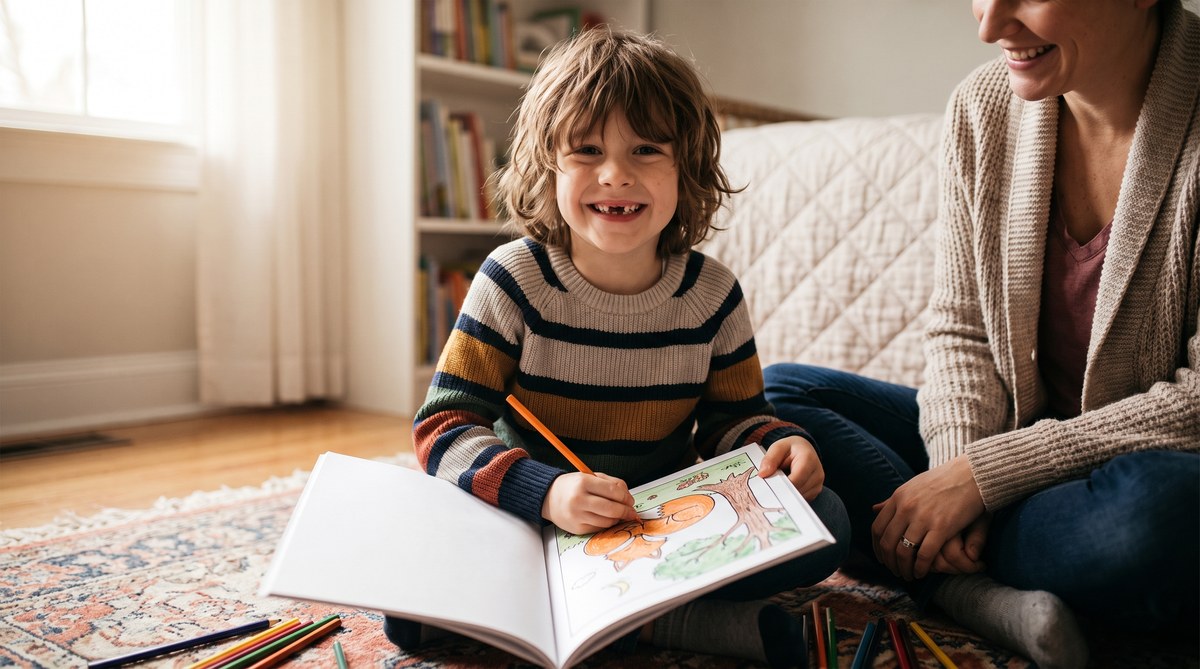
Elementary teachers can usually tell which kids have spent real time closely looking at things, a leaf's edges, the pattern on a pinecone, the shape of a bird's nest, versus kids who mostly haven't. That habit of close looking isn't a small thing. It's the same skill that later shows up as noticing details in a reading passage or spotting a pattern in a science lesson.
A coloring page that's accurate to real nature trains that habit almost without a child noticing. A fox drawn with the right proportions, low and long-bodied with a bushy tail, teaches a different kind of attention than a generic blob labeled 'animal.' The child has to actually look at the shape to color it correctly, not just fill in space.
This kind of book also gives you more to name out loud together than a flat animal catalog does: the difference between a trail and a path, a hollow and a burrow, antlers and ears. There's no text printed on the pages themselves, every page is pure line art, so that vocabulary comes from the conversation while you color side by side, not from words on the page. Naming specific things, and specific parts of things, is a skill that transfers directly into how a child describes what they see and read.
A simple way to reinforce it at home: after a coloring session, take a short walk outside and ask your child to spot the real version of something they just colored, a pinecone, a mushroom, a bird's nest in a tree. That connection between the page and the real world is where the observation skill actually sticks.
Forest Adventure & Nature Discovery was built around real woodland details for exactly this reason: species-accurate animals and real trail gear (a compass, a rope bridge, a treehouse) across a 40-page adventure, designed for kids ages 6-8 who are ready to notice more than a toddler book ever asked them to.
Forest Adventure & Nature Discovery
Ages 6-8