2026-09-11 · 4 min read
Why Kids Ages 6-8 Are Ready for Coloring Books That Get Harder as They Go
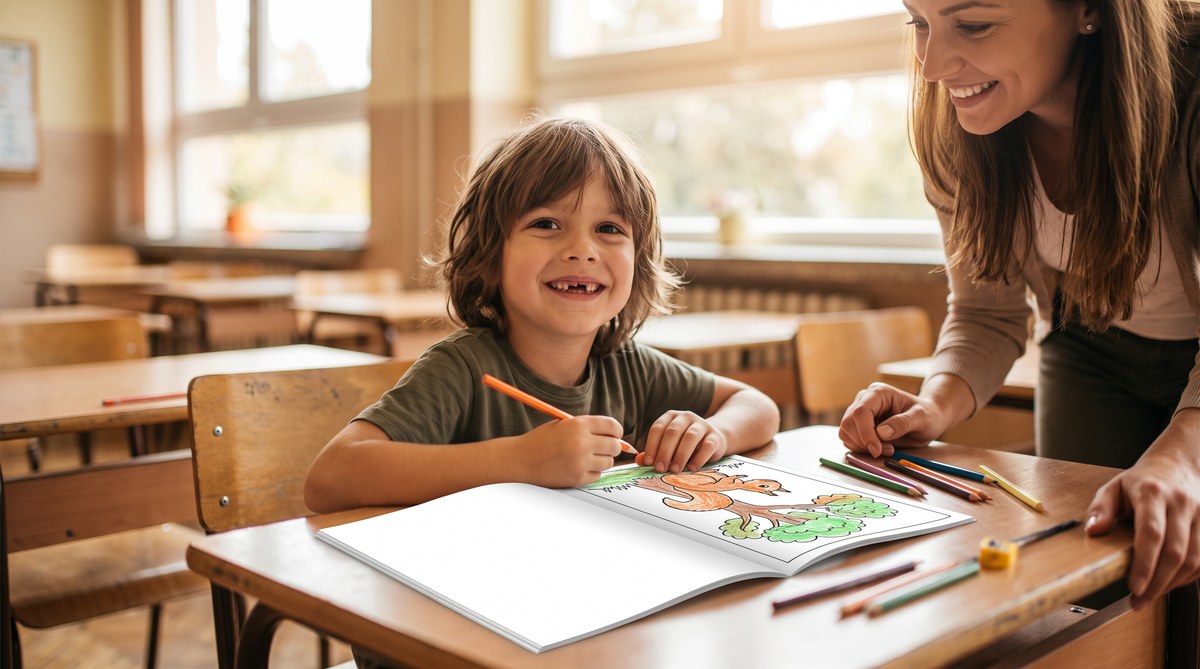
By age 6 or 7, a lot of kids who grew up on toddler coloring books start losing interest in them, and it's rarely because they've outgrown coloring itself. It's because the challenge stopped growing with them. Forty pages of the same difficulty level, no matter how cute, eventually feels like the same page over and over.
In a classroom, no one hands every child in the room the identical worksheet for a full year. Skills get scaffolded: a simple version first, then a slightly harder one, then harder still, so a child keeps hitting a level that's just past what they can already do. A coloring book can follow the same logic, starting with one big simple object per page and gradually adding more elements, more detail, and a bit more line complexity as the pages go on.
That gradual ramp matters for more than boredom. When every page is exactly as hard as the last one, a child either coasts without building anything new, or hits a wall the moment the book finally asks for more than they're used to. A book that eases a child upward one page at a time builds real patience and persistence instead of frustration, the same way a well-sequenced lesson does.
When you're choosing a book for a 6-to-8-year-old, look past the age label on the cover and check whether the description mentions any kind of progression, not just a flat page count. That single detail tells you whether the book was actually designed for this stage or just resized from a younger one.
Forest Adventure & Nature Discovery was built around exactly this idea: the 40 pages move from a single trail signpost early on to a detailed, story-closing campfire reunion scene at the end, so a child feels the book grow harder right alongside them, one page at a time.
Forest Adventure & Nature Discovery
Ages 6-8